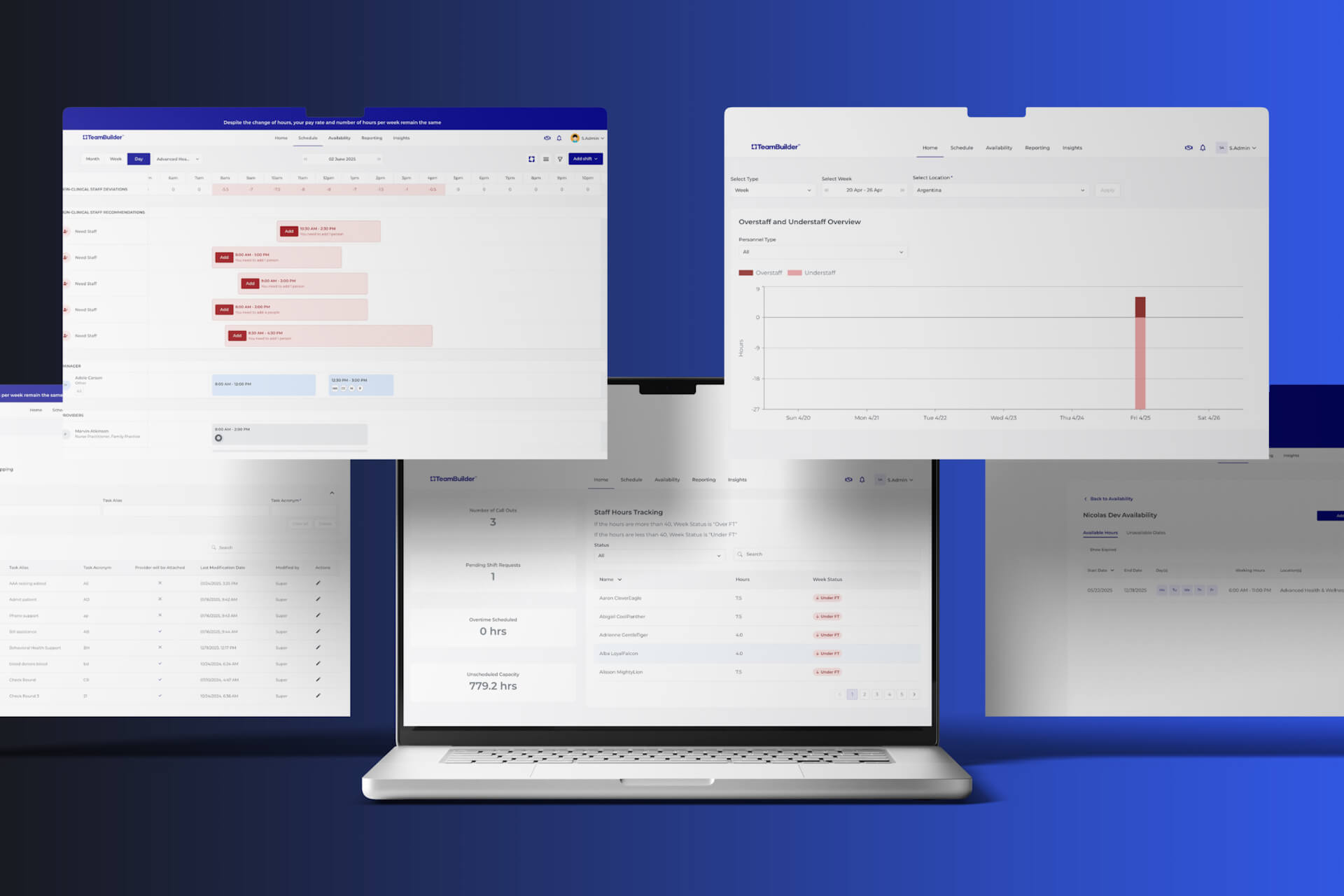
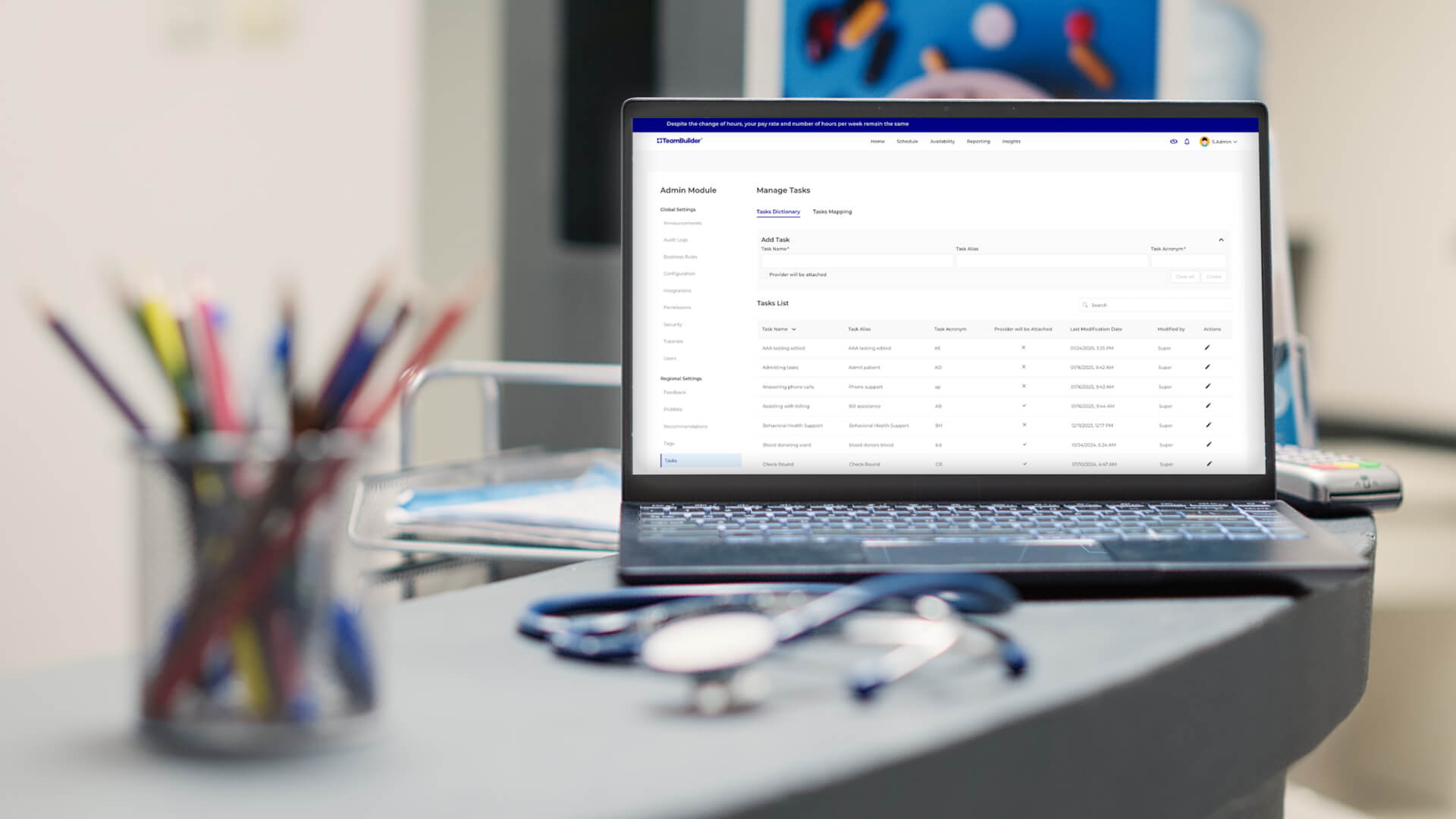
Dualboot embedded with TeamBuilder as a full-service product and engineering team, aligning closely on goals, scope, and timelines. We began with a collaborative design sprint to define key workflows, technical requirements, and data needs. From there, we moved into structured two-week development sprints—allowing for fast, iterative progress.
Our engagement was built on flexibility and deep expertise. As product requirements evolved, our team adapted—balancing rapid delivery with thoughtful design and scalable architecture.
Implementation
To build TeamBuilder, we assembled a flexible team of 3–6 Dualboot experts, covering UX, graphic design, frontend, backend, and DevOps. We worked in two-week sprints, guided by a dedicated project manager who kept everything moving through regular updates, backlog grooming, and shared slide-based progress reports.
We started with the foundations:
- Role-based authentication and clinician identity logic, designed to ensure the right access for the right users.
- A dynamic scheduling engine, allowing shift plans to be created based on role, availability, and forecasted demand.
- A scalable architecture ready to integrate with data science tools—so predictive modeling could guide smarter staffing decisions.
As the MVP matured, we layered on admin tools and reporting modules, giving leadership visibility into coverage, utilization, and upcoming gaps. Stable DevOps environments supported continuous testing and iterative releases, while UAT cycles helped validate new features before rollout.
One constant throughout: adaptability. We continuously refined workflows based on feedback, delivering what was needed—when it was needed—to get the product ready for launch.
“Dualboot didn’t just help us build software—they helped us bring a complex, high-stakes idea to life. Their flexibility, speed, and ability to manage technical depth made them an invaluable partner from day one.”

Michael Paraskakis
CTO at TeamBuilder