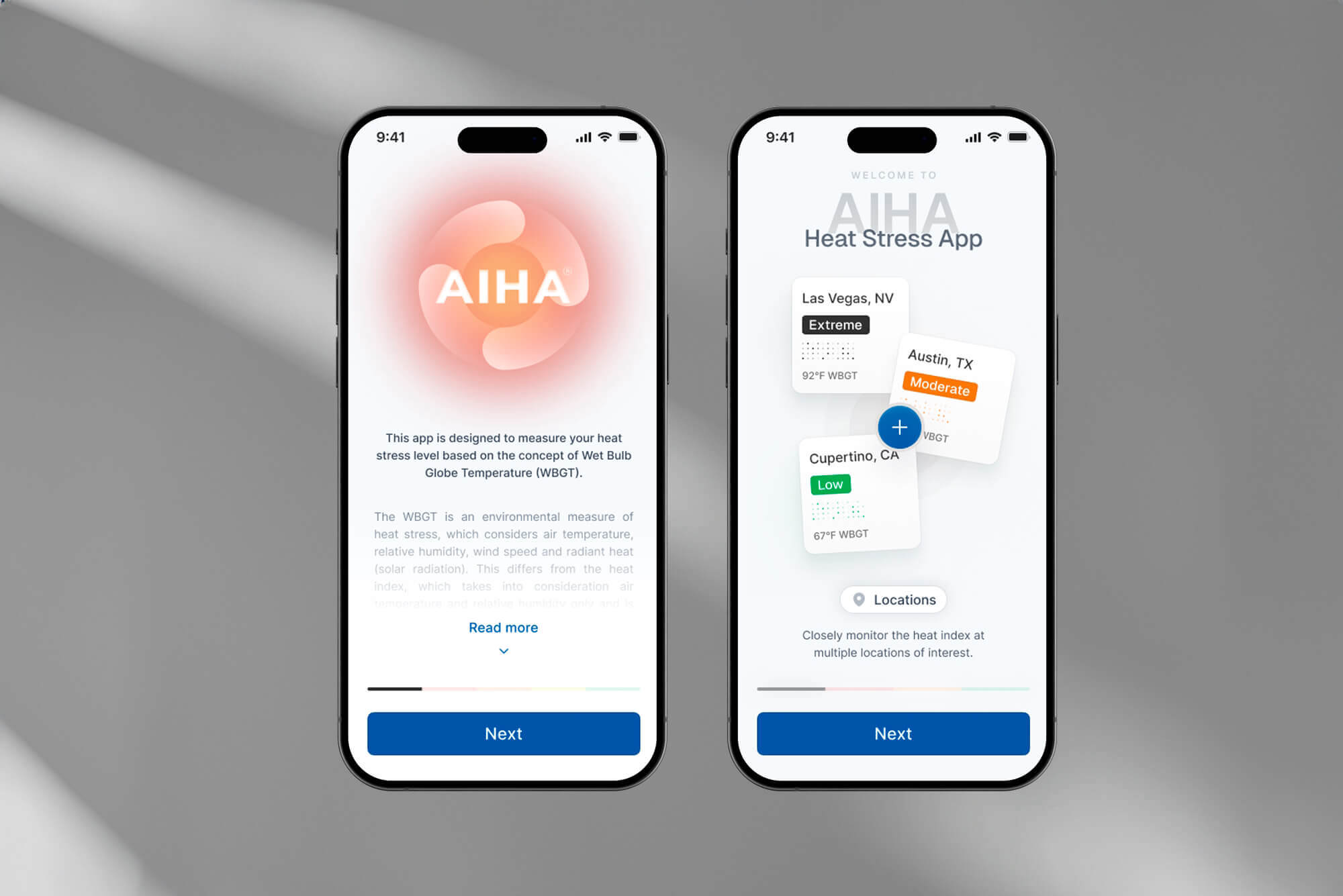
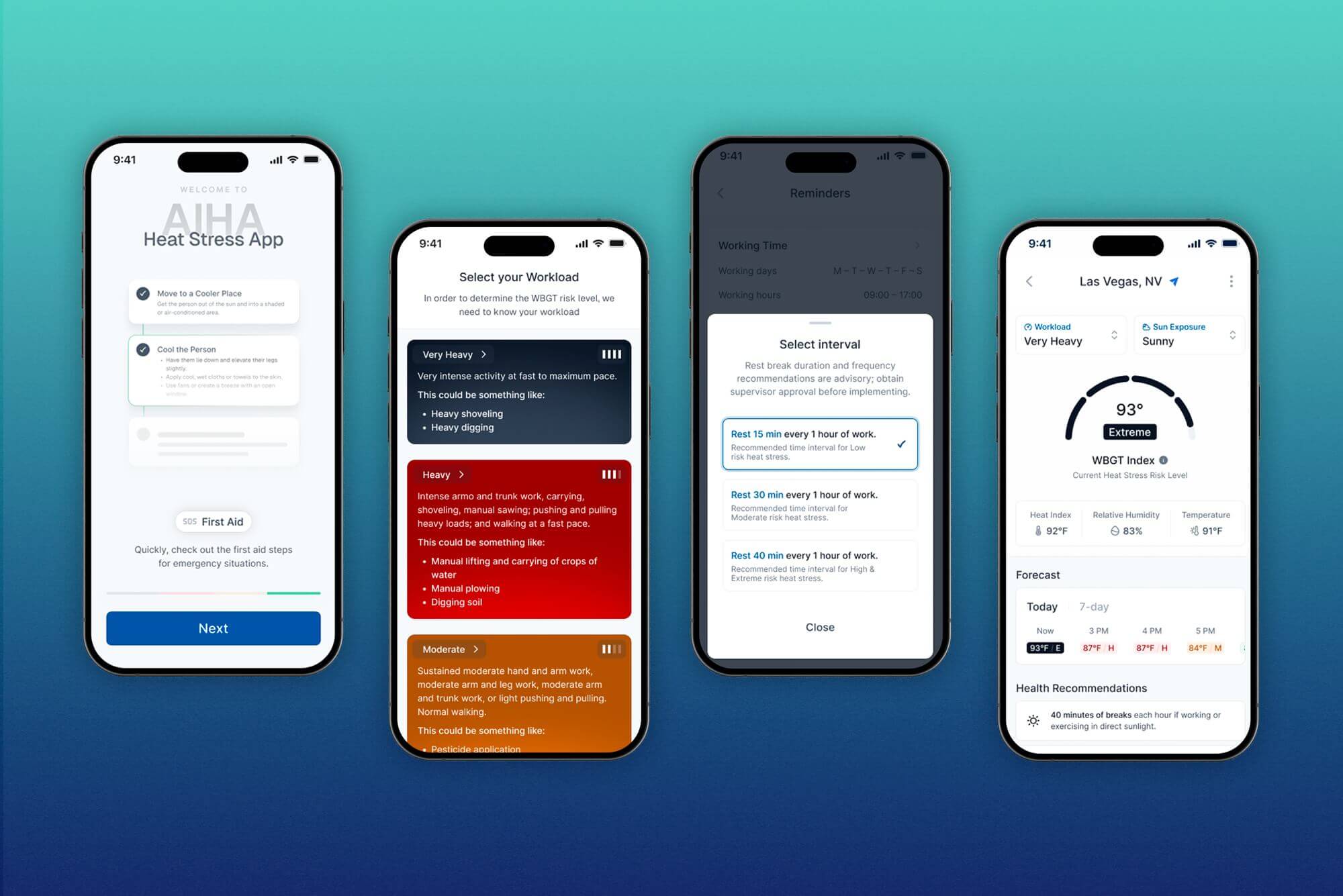
It all began when AIHA, the association for scientists and professionals committed to preserving and ensuring occupational and environmental health and safety (OEHS), turned its attention to heat.
“Our climate is evolving, changing, and we decided to form a committee called the Thermal Stress Working Group, to help advance the science and develop products and materials to protect outdoor workers from excessive temperatures,” said Lawrence Sloan, CEO of AIHA.
At the time, an existing application on the market, developed through a collaboration between The National Institute for Occupational Safety and Health (NIOSH) and the Occupational Safety and Health Administration (OSHA), used the heat index to calculate heat burden on workers. In reality, however, the heat index is not the only factor to consider. For example, heat index is measured in the shade. Sun exposure, humidity, and clothing type all contribute to the effects of extreme heat. The AIHA Board and members of the working group wanted to create an application that could address extreme heat holistically and, in the process, provide greater protection to workers at risk of exposure.
At first, AIHA approached NIOSH and OSHA and asked to partner on an upgraded application. Both organizations declined, having removed app building from their current operations. Then came the summer of 2022 – the third warmest on record for the contiguous U.S. – and AIHA decided they didn’t want to wait for a partnership. The association would build its own app. The Thermal Stress Working Group put together an RFP and began the process of finding a development firm.
AIHA received several solid proposals, but the strongest came from within the working group. Jo Anne Balanay, PhD, a professor of environmental and occupational health in the environmental health sciences program at East Carolina University and an AIHA member, had developed an algorithm that used Wet Bulb Globe Temperature (WBGT). WBGT is a technology that measures more than just air temperature to more accurately calculate heat stress risk level.
“Essentially, they had the heart and the soul of the app already developed,” Sloan said.
They also came to the table with a preferred technology vendor: Dualboot Partners.
AIHA approved the funding for the project in the fall of 2023, and work on the app began.