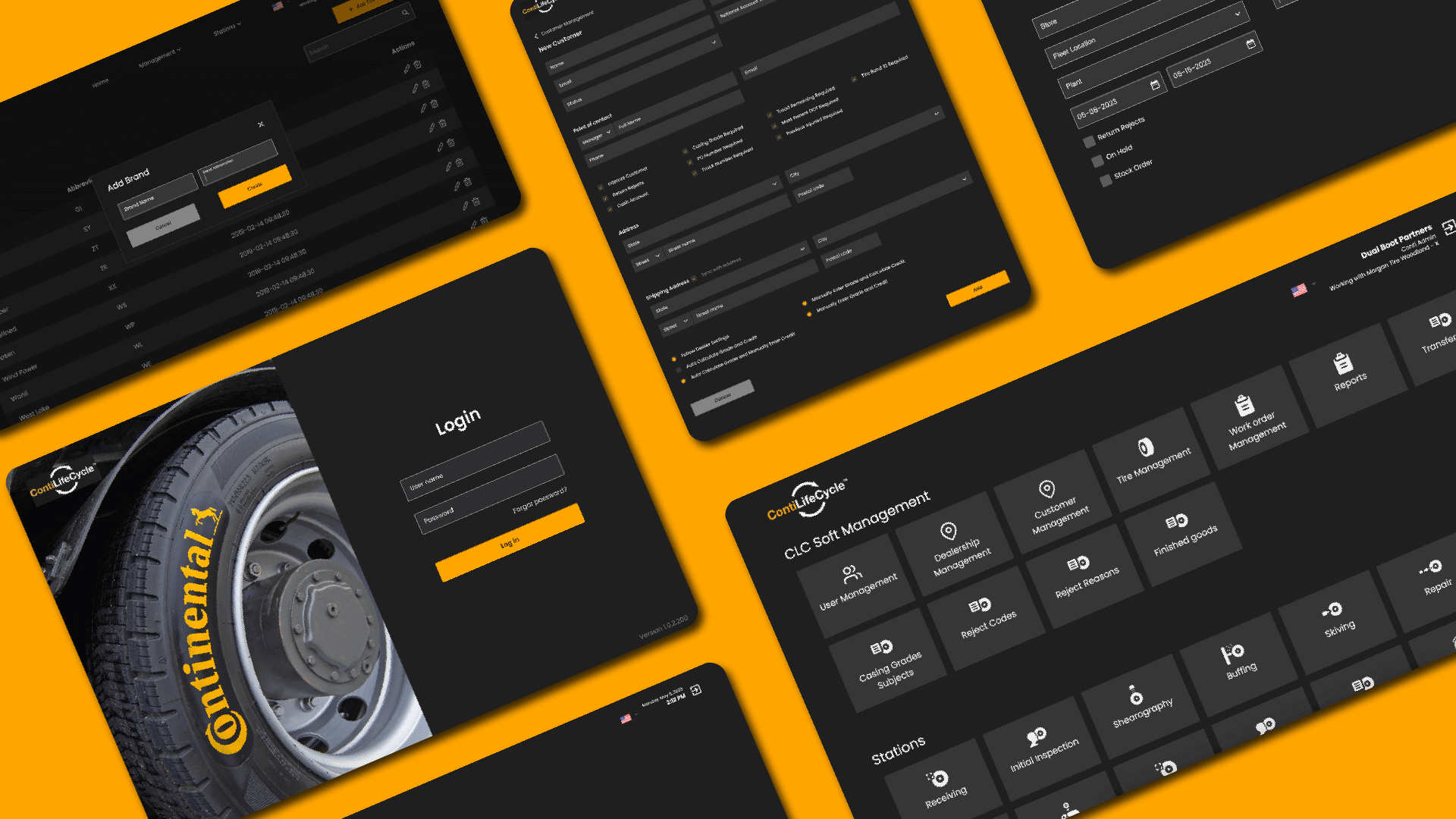
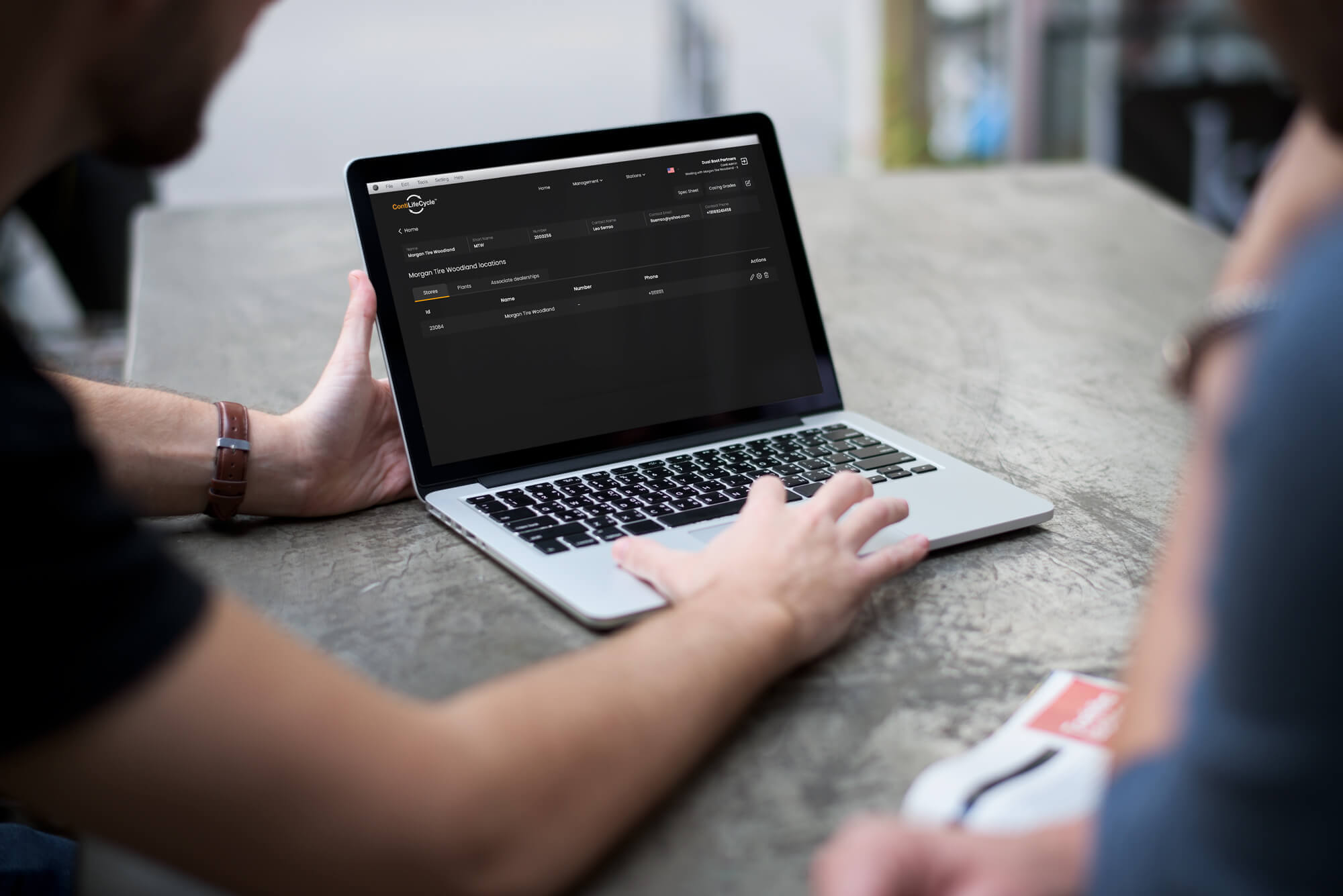
The ContiLifeCycle app is accessed throughout the multi-stage process with the technician entering data into the computers at each station on the floor. Whether its buffing, repair, hot or cold building or curing, or inspection, each individual retreading station collects and reports data. Plus, each shop had its own specific processes and features from the old application that it relied upon in inventory management and workflow tracking.
Dualboot began its process with an analysis of the existing lifecycle tracking product and discussions with Continental’s stakeholders to identify priorities and opportunities for new functionality. The goal was to enhance reliability and future harden the application.
Along the way with any project, as development continues, Dualboot expects requests to pivot or expand feature offerings. In this case, when a new project manager joined on the client side, the priorities shifted in a big way.
The original plan was to build something to replace the old software, not replicate it. Then, under the new project manager, the goal shifted to replicating every feature of the old platform. It was a big pivot, but Dualboot’s development team built everything that Continental needed. Plus, they did it in time to bring all 13 shops online by the original end of 2023 deadline.
Since each retread location has its own computer systems and siloed data as well as unique processes, bringing each shop online was an added project challenge. Starting with an October visit to a retread shop in Indianapolis after the shift finished at 11 p.m. on launch night, Dualboot’s team ensured every shop had its own version of the system deployed by December 2022. Every two weeks another grouping of shops was launched with Dualboot spot-checking, getting feedback, and making updates along the way.
In many cases, the shops run three shifts a day, which means many opportunities for feedback but no great time to deploy. Plus, if something did go wrong, that could stop work for the entire shift. Quality assurance was critical and any changes had a very quick turnaround.
At the same time, since Continental is a multi-national enterprise client, Dualboot’s team might have to collaborate as well with the company’s DevOps team in Germany to troubleshoot. This meant international calls with screen sharing to try and sort out solutions in real time.
In the end, Continental’s platform has turned a corner.